Google Testing Job Sites SERP Feature Above Google Jobs
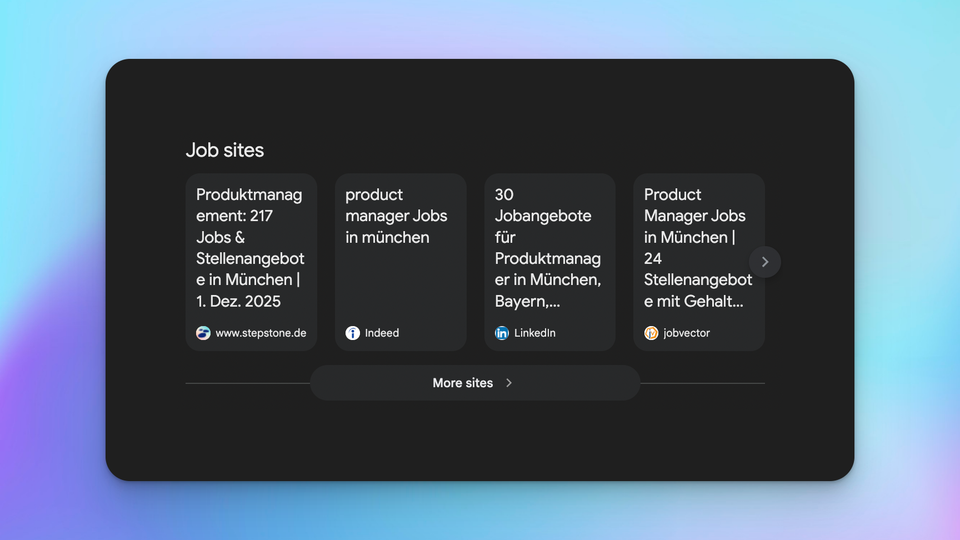
This is going to be quite exciting for any job board looking to improve their organic traffic.
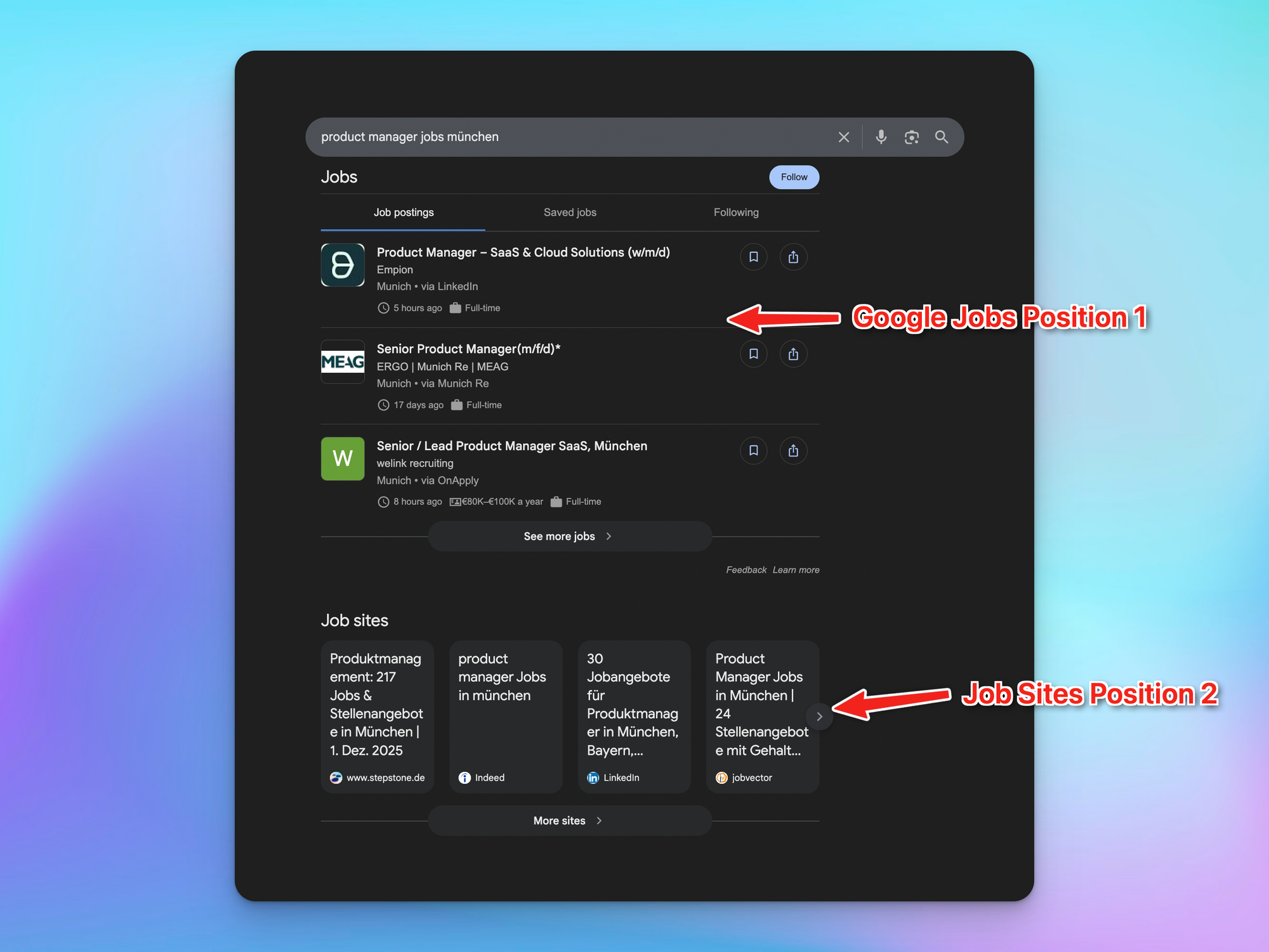
I have been observing Google test a new placement for the Job Sites SERP feature. Instead of appearing below Google Jobs (its current default position), I am seeing it displayed above Google Jobs in multiple tests, as a first organic result.
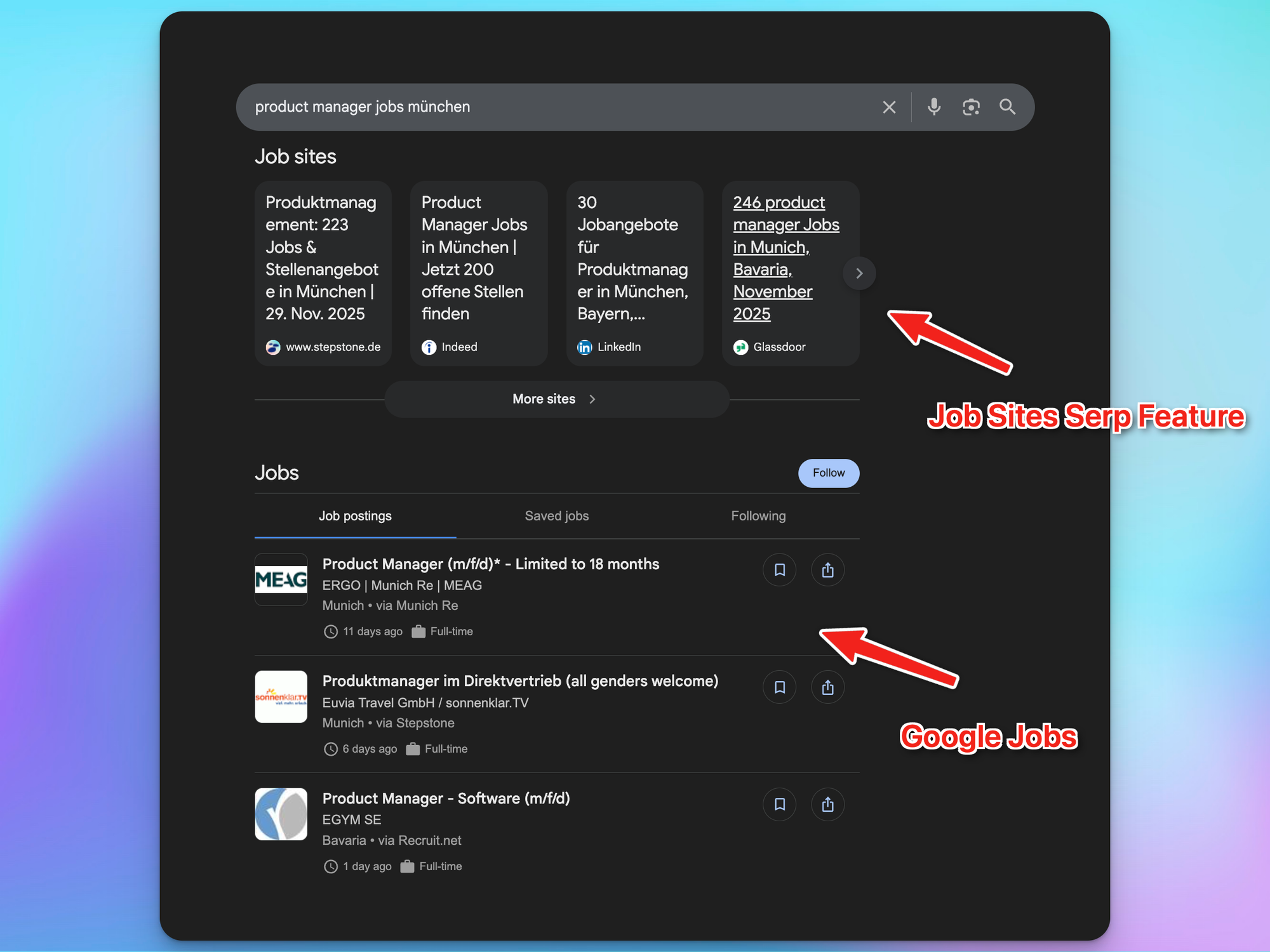
If this rolls out more broadly, it could meaningfully shift how traffic flows to job boards. In this article, I will explore why this is happening and how you can prepare should this change remain.
But first, let’s cover some basics. Google Jobs and The Job Sites are SERP Features but what does that mean exactly?
What are SERP Features?
SERP features are the additional elements Google displays beyond the standard ten organic results. You are already familiar with many of them: Knowledge Panels, People Also Ask boxes, Featured Snippets, and of course, Google Jobs. Each feature changes how users interact with search results and where clicks ultimately go.
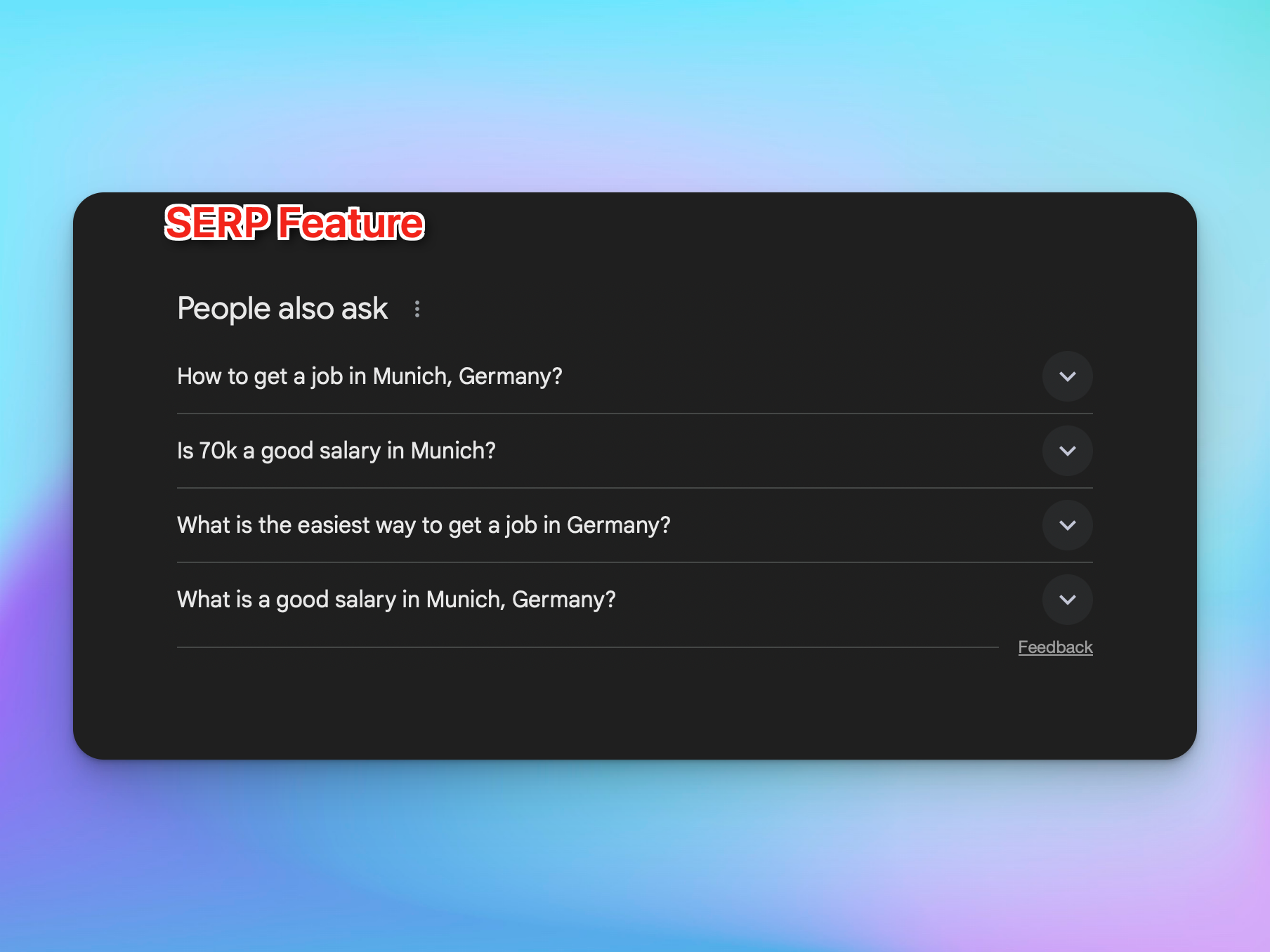
So, for all we care, these are valuable options for a job board to get additional traffic, and they are essential, because they can be the first organic search result for most job seekers
The Job Sites SERP Feature
Google introduced the Job Sites feature in early 2024. I covered it extensively when it first appeared in testing in Germany, Austria, the Netherlands, and France. At the time, I called it the most significant change on Google for job boards since the launch of Google Jobs itself.
Do you like this article? Drop your email and get them in your mailbox!
The feature works differently from Google Jobs. While Google Jobs aggregates individual job listings and displays them directly in the search results, the Job Sites feature links to category pages on job boards and aggregators. When a user clicks on a Job Sites card, they land on a search results page, such as domain.com/product-manager-jobs-munich, not on an individual job posting.
How is the Feature Triggered?
When job seekers search for jobs on Google, they typically use transactional keywords. These follow a predictable pattern:
[Occupation] + [Location] + job/jobs (or career/careers or other)
Examples:
- Product Manager Jobs Munich
- accountant jobs London
- data analyst jobs remote
- nurse jobs near me
These searches have clear transactional intent – the user is actively looking for job opportunities, not just researching a career path or reading about an occupation. This is high-value traffic because these users are ready to engage with job listings and apply.
These transactional keywords will usually trigger both Google Jobs and the Job Sites feature simultaneously.
The job boards that rank for these transactional keywords capture job seekers at the moment of intent. This is why category page SEO is so critical – each well-optimized category page is an entry point for job seekers actively searching for opportunities in that specific niche.
The Job Sites SERP feature is specifically designed to target these transactional searches. It appears only for job-related queries and links directly to category pages that match the search intent. This makes it a direct channel for capturing high-intent traffic.
How to Rank as a Job Board in the Job Sites SERP Feature?
Now, the interesting part is how Google picks which sites to list there. While Google Jobs has specific schema requirements, the Job Sites feature does not have one (though you can argue that the carousels schema applies to it, too). Yes, and there is a form you can use to apply to get featured.
The feature typically pulls from sites ranking in the top 10 organic positions for a given query, though I have observed it occasionally including results from page 2 as well. It displays up to 16 results that users can swipe through, though realistically, the first four cards capture most of the attention.
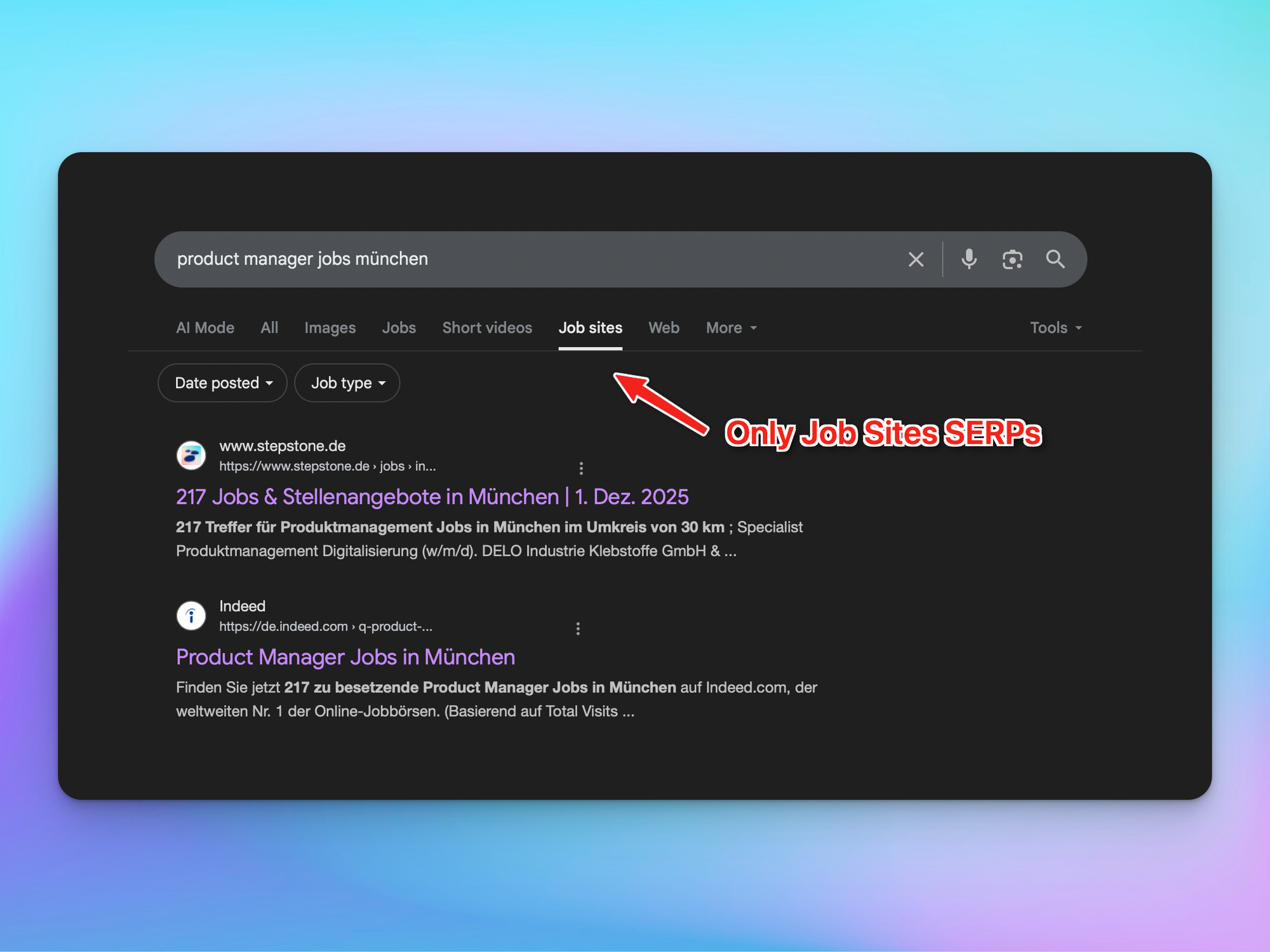
Clicking on the "More Sites" button leads the users to an additional filter applied to the SERP that only shows Job Sites:
The timing of this feature's introduction is worth noting. It appeared shortly after the Jobindex case in Denmark, in which the job board sued Google for copyright infringement and anti-competitive behaviour.
Although Google ultimately won that case, the Job Sites feature looks like a concession – a way to send traffic back to job boards rather than keeping users entirely within Google's own Jobs interface. Whether this was a direct response to the litigation or a broader move to preempt similar complaints elsewhere in Europe (DMA Act), the effect is the same: job boards get a dedicated SERP feature that links directly to their pages.
Which is quite cool!
Placement and position change
When Google first tested the Job Sites feature in early 2024, it appeared above Google Jobs – a very prominent position directly below sponsored results. This placement gave it significant visibility.
However, when the feature officially launched and rolled out more broadly, Google moved it below Google Jobs. This is the current default behaviour you see today: Google Jobs appears first, followed by the Job Sites carousel underneath.
I am now seeing the Job Sites feature appear above Google Jobs again across multiple tests. This is not yet the default, but the fact that Google is testing this placement is noteworthy. Higher placement (or in this case - first organic result) generally means more clicks, and if Google decides to make this change permanent, job boards with well-optimized category pages stand to benefit.
A LOT.
Why Is Google Testing This in Europe?
The fact that these tests are happening in Europe is not a coincidence. There are a few plausible explanations.
The most obvious is antitrust pressure. The EU already ruled against Google in the Shopping case for self-preferencing its own comparison service over competitors. Google Jobs is structurally similar – it aggregates third-party content and displays it prominently in its own interface, potentially at the expense of the sources.
Elevating the Job Sites feature (which sends traffic directly to job boards) above Google Jobs could help preempt similar complaints before they escalate.
Another change Google made to reduce stress here is to show only a snippet of the job description in the EU version of Google Jobs, whereas the US version shows the full one.
There is also the Jobindex case to consider. Google won the copyright lawsuit in Denmark, but the underlying competitive tension has not disappeared. Giving job boards more prominent placement could be a strategic move to reduce the appetite for future litigation.
The Digital Markets Act (DMA) is another factor. Google is designated as a "gatekeeper" under the DMA, which has specific rules around self-preferencing. Testing Job Sites above Google Jobs in Europe – where the DMA applies – could be Google's way of demonstrating that it gives third-party sites fair visibility. This is precisely the kind of change regulators want to see and the Job Sites feature did come out shorty after the DMA.
Finally, this fits a broader pattern I have been documenting. Google has been gradually softening the Google Jobs experience – removing the prominent apply button and making the module less visually dominant with the 2024 redesign I reported.
Moving Job Sites above Google Jobs is consistent with this direction: reducing Google Jobs' prominence while still offering job search functionality.
Why This Matters for Job Boards
The distinction between Google Jobs traffic and Job Sites traffic is essential.
Google Jobs sends users first to a job detail page hosted on Google and only then to individual job listing pages. These pages have a short lifespan – once the job expires, the page either gets removed or becomes a dead end. Traffic is valuable, but it is inherently tied to your job inventory churn and to how well you convert users from both live and expired jobs.
The Job Sites feature, on the other hand, sends traffic to category pages. A page like /marketing-jobs-london or /software-engineer-jobs-berlin is an evergreen asset. It exists regardless of which specific jobs are live at any given moment and drives significantly more valuable actions. The page can rank for months or years, consistently driving traffic as long as it remains optimized and relevant.
If Google moves the Job Sites feature to a more prominent position, the value of these category pages increases. Job boards that have invested in optimizing their search result landing pages – proper URL structures, unique content, fast load times, solid internal linking – will be better positioned to capture this traffic.
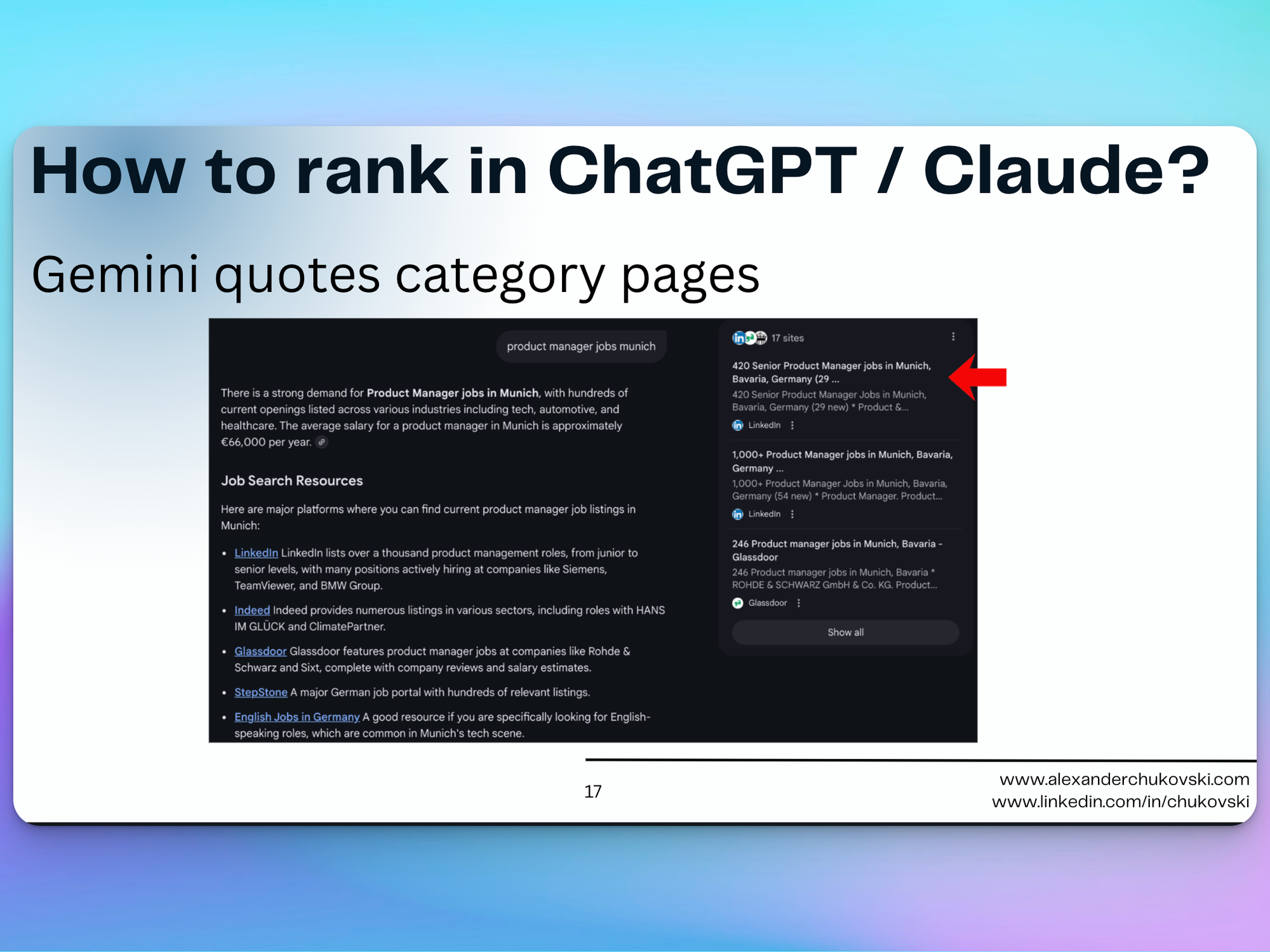
Last but not least - both AI Overviews and Gemini already quotes Category pages in the search results.
What You Should Do as a Job Board
This is another reminder to treat category pages as strategic SEO assets, not just functional search result pages. A few things to check:
Your category pages need unique, valuable content beyond just a list of job titles. Think about what a job seeker landing on /data-scientist-jobs-berlin actually needs: salary context, market insights, related roles, and clear filtering options.
Technical fundamentals matter. Page speed, mobile experience, server-side rendering, proper canonical tags, and clean URL structures all influence whether Google includes your pages in the Job Sites feature and in good job matching.
Internal linking to category pages from your job listings, blog content, and other pages helps establish their authority.
I will continue monitoring whether this placement change rolls out more broadly. For now, it is worth keeping an eye on your own search results and seeing how the Job Sites feature appears for your target keywords.
If you need help with getting your job board to rank in the Job Sites feature, Google Jobs optimization or general SEO advice, use the contact form to reach out or just connect with me on Linkedin.
Follow me if you want to learn more about optimizing the organic traffic of your job board: